



English
Reading
At Richard de Clare, we aim to support pupils to become fluent and confident readers through strong teaching of reading at each developmental stage. In addition to this, we aim to foster a love of reading through sharing high-quality texts with them throughout their time here.
We are lucky to have an attractive and well-stocked library which enables us to ensure pupils have the right book to suit them.
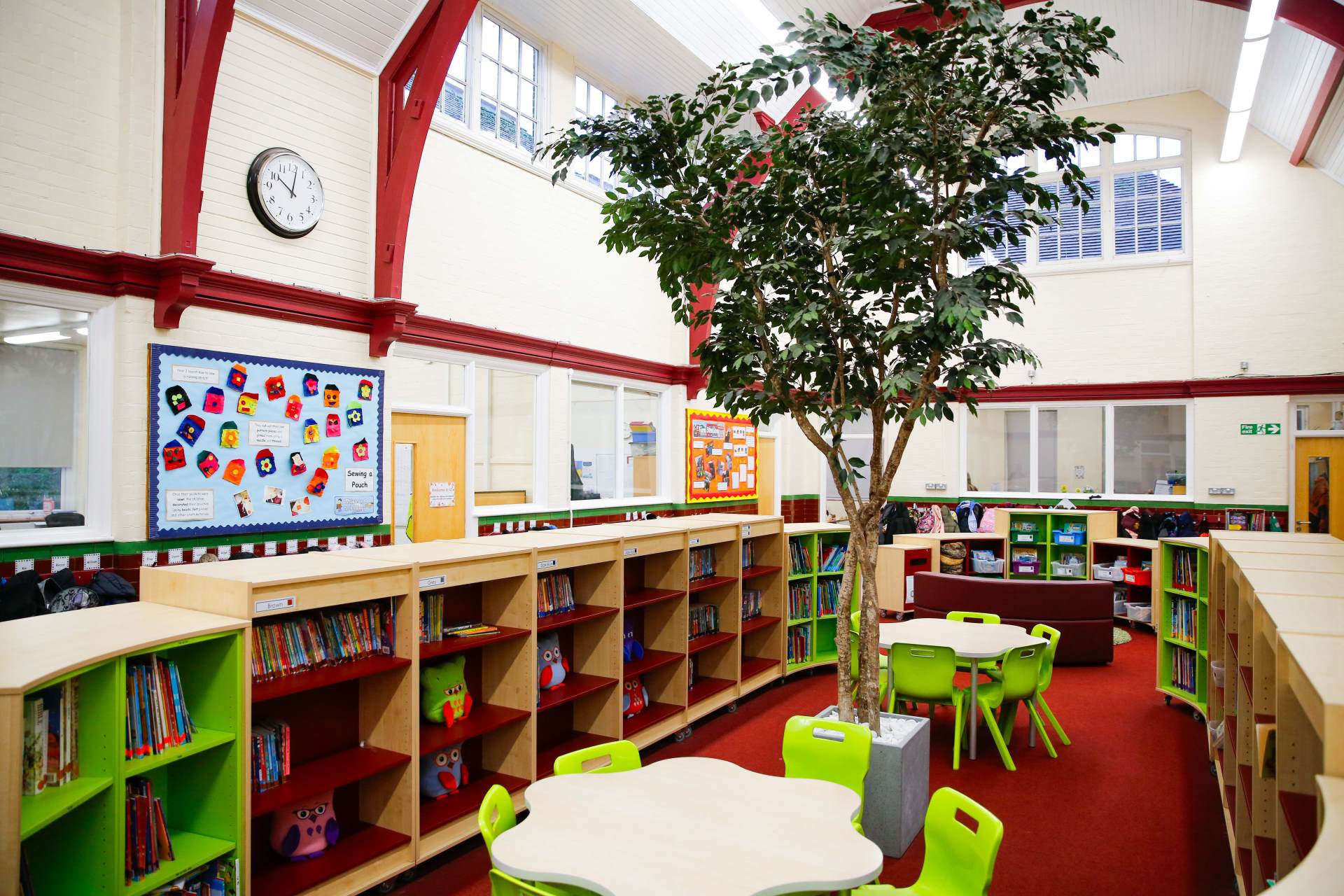
We take opportunities to celebrate reading with our families through termly parent/child reading breakfasts, where school staff and families come together to share the joy of reading.
Home School Reading
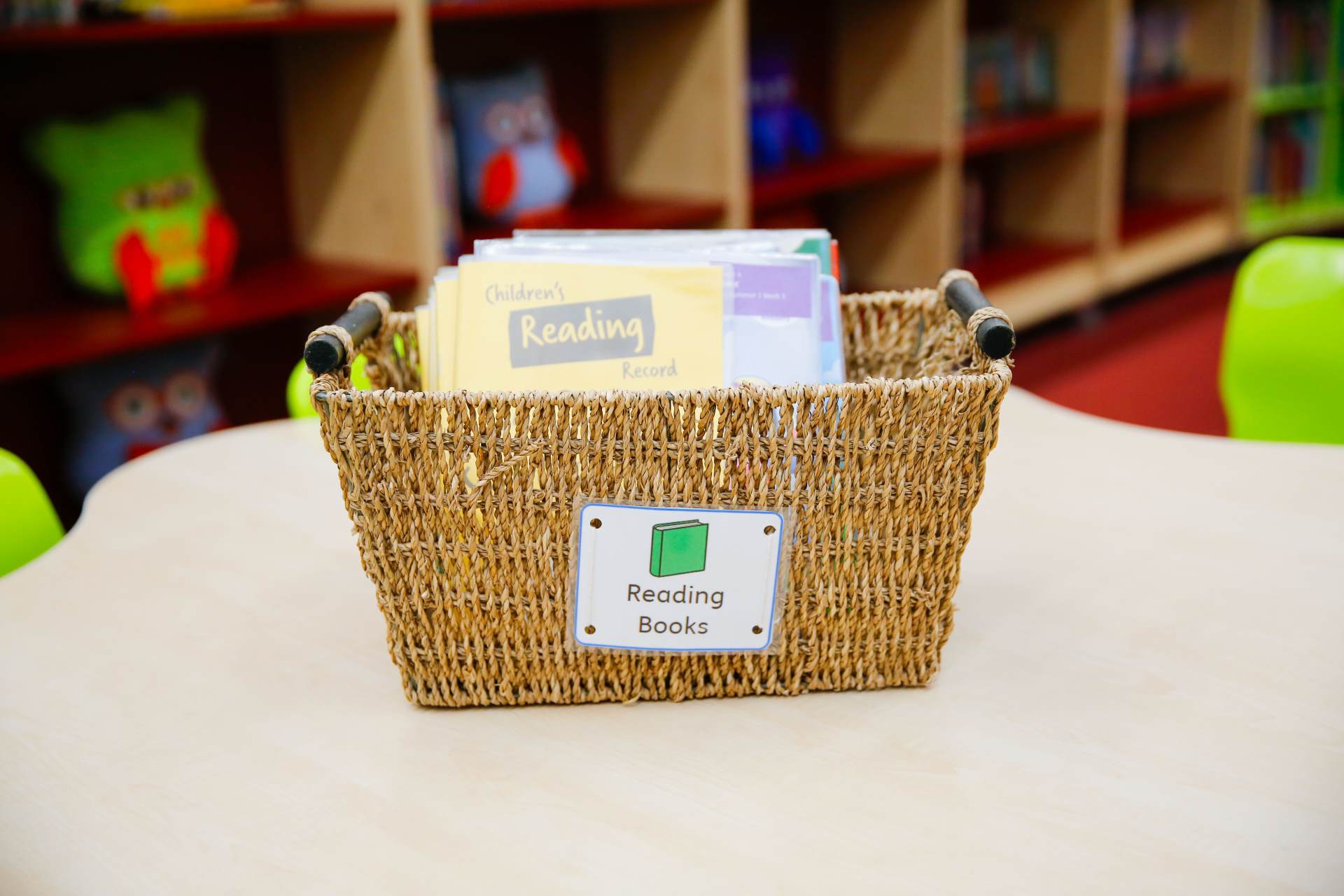 In Reception and Year 1 all home-school reading books are matched carefully to a child’s current stage of development and phonic knowledge. Children’s books are changed regularly by class teachers/ LSAs during 1:1 reading sessions. Children are expected to take a book home with them every day in order to practice what they have learnt in daily phonics sessions. They should re-read the same text over the week until they have built fluency and automaticity with it.
In Y2-6, children’s books are colour banded in relation to the Oxford Levels. Pupils are also expected to take their book home daily and read it with an adult but with increasing levels of independence. At intervals throughout the year, teachers will check that a child’s book band is appropriate by listening to them read on a 1:1 basis and move pupils up where appropriate.
Phonics
We use Essential Letters and Sounds (ELS) to teach phonics at Richard de Clare. Pupils in Reception and Year 1 receive daily phonics instruction using this scheme.
ELS is continued to be used to support pupils with developing phonic knowledge into Year 2.
KS2 pupils requiring additional phonics teaching receive support through the ELS Progress intervention along with other targeted interventions.
Whole Class Reading Year 2 to Year 6
In years 2-6, reading is taught through whole class reading sessions five times per week with texts from our school reading spine. The aim of these sessions is to build pupils’ reading stamina and fluency, knowledge of vocabulary and application of reading comprehension skills.
All learning objectives follow National Curriculum objectives.
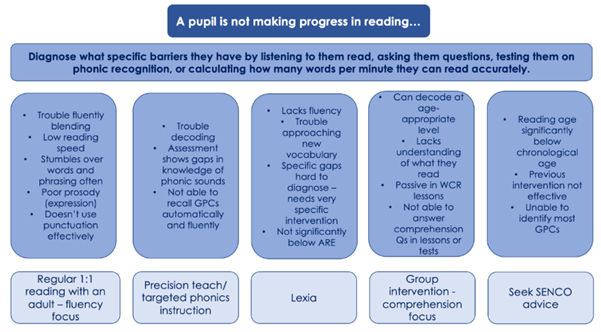
Additional Support in Reading
Writing
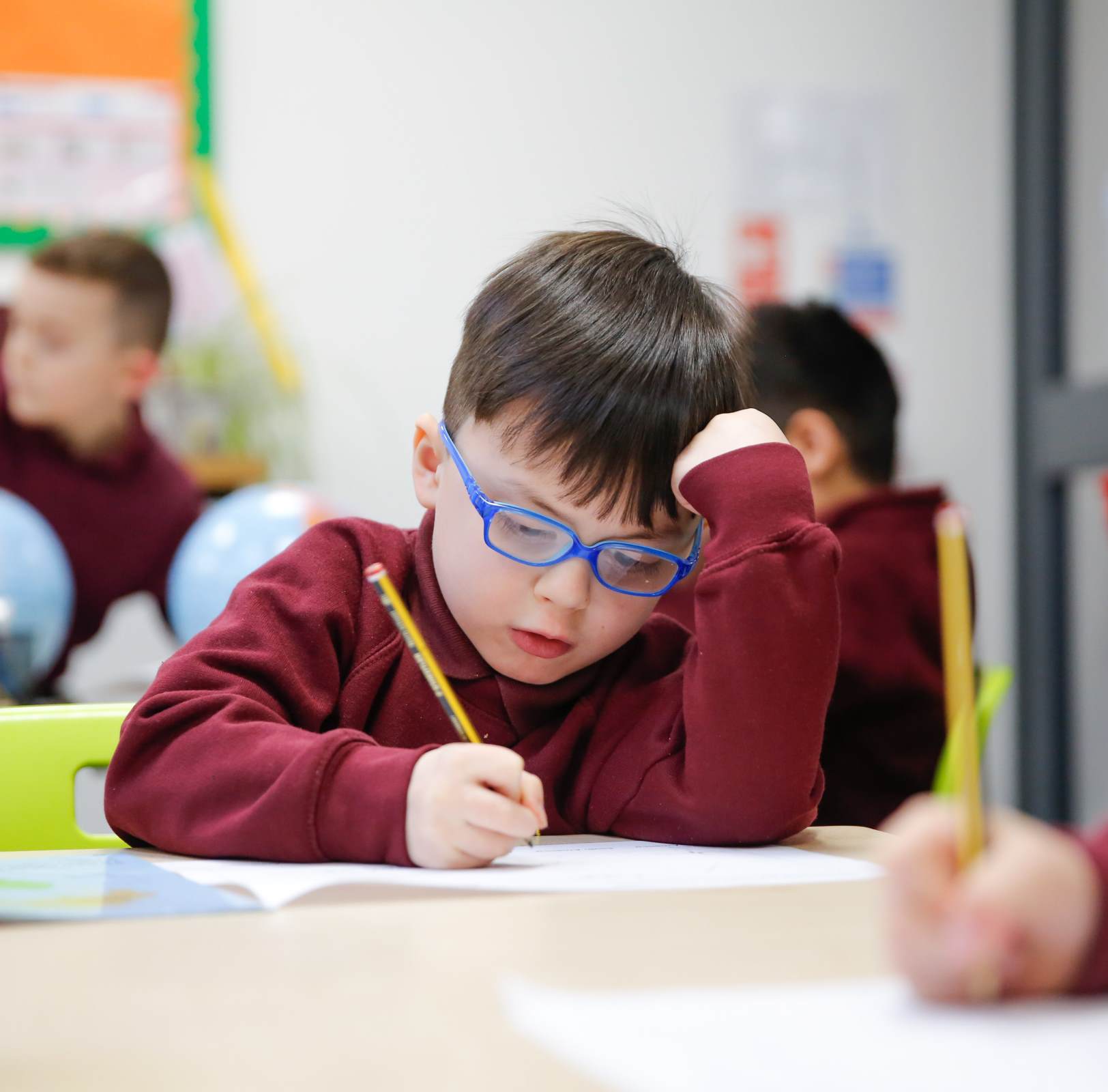 We understand that a strong foundation in learning to write important for pupils’ future success. Writing is cognitively complex and demanding process. Therefore, we break this down through high-quality and carefully sequenced teaching of writing from the Early Years to Year 6.
The teaching of writing is supported by both the Jonathan Bond English Unit Kit (Y1-6) and Drawing Club (YR).
In Reception and Year 1, we focus on sentence level writing, building over time to writing a series of sequential sentences. This helps us to ensure that pupils have mastered the foundational skills of writing before moving on.
In Y2-6 pupils build an understanding of the structural and grammatical features of a range of fiction and non-fiction text types (e.g. narrative, explanation, recount). These are revisited throughout their time at school and are approached in an increasingly complex way.
Handwriting and Spelling
Strong handwriting and spelling are vital to writing fluency. We prioritise these foundational skills from Nursery to Year 6.
Teaching of handwriting starts with developing the gross and fine motor skills required for good posture and pencil control. In Nursery and Reception, we use the Squiggle While You Wiggle programme to support this.
Following this, pupils in Reception to Year 6, follow the Nelson handwriting scheme, where they are explicitly taught letter formation and joins.


